Principles and Framework for Fairness and Proportionality: Evaluation and revised resources to support the management of performance concerns
Practitioner Performance Advicehas published a revised fairness and proportionality Framework as well as new case studies and an Insight publication, to support the local management of performance concerns.
This Insight shares findings from an evaluation of the Principles and Framework for Fairness and Proportionality resources, highlighting how they have been used in practice, what difference they are making and how the revised resources respond to what organisations told us they need. This Insight builds on the January 2025 Insight in Practice publication, focusing on what we have learned from the evaluation.
Organisations are encouraged to:
Make use of the revised resources.
Learn from how other organisations have used the Principles and Framework to consider how to implement and embed them in local processes e.g. Consider reflecting the resource in local policies and using the Framework to audit cases at your organisation to identify areas of improvement.
Share the revised resources with colleagues, as well as this Insight as evidence of the value they can bring to local management of performance concerns.
Use the case studies with colleagues to embed knowledge and understanding of the benefits of the Principles and Framework.
2. The role of the Principles and Framework
In January 2025 NHS Resolution’s Practitioner Performance Advice Service published Principles and Framework for healthcare organisations managing performance concerns, in collaboration with NHS England’s Professional Standards Team. The Framework and accompanying resources were developed for healthcare organisations to support them to identify the key considerations to promote fairness, proportionality and consistency in decision making when managing and resolving performance concerns.
Our evaluation has demonstrated that the Principles and Framework are valued as a resource that supports good case management. The evaluation reflects our commitment to ensuring that the resources evolve with use and remain trusted and impactful. We adopted a collaborative approach to reviewing its effectiveness, involving healthcare organisations, national bodies, representative organisations, and colleagues across Advice, and we are grateful for all their contributions. Details of the approach and methodology are outlined in Section 8 below.
3. What we’ve heard from the evaluation
Those familiar with the resources understood and valued their purpose – promoting fair and proportionate management of performance concerns. The most common source of awareness according to survey respondents was via NHS Resolution’s Practitioner Performance Advice Service. However, national bodies and practitioner representative organisations were not seeing the Principles consistently applied, indicating there is still a need to increase awareness and support translation into practice. There is still scope to embed it further and broaden reach across HR professionals, practitioner representative organisations and individual practices in primary care. Evaluation participants suggested training to bridge the gap between the Framework and practice.
Different uses by healthcare organisations and by Advisers in NHS Resolution’s Practitioner Performance Advice Service suggest the resources have contributed to building capacity and capability. Organisations have reflected the Principles in their own policies and/or created shorter versions, suggesting it is being used as a configurable resource. Examples are provided below under Section 4.
Most survey respondents and healthcare organisations who participated in the focus groups were able to identify the added value the Framework brings. In the survey, most (8 of 14 respondents who provided an answer) indicated that they agreed or strongly agreed that the Framework had improved their approach to case management.
“These resources will highlight good performance management principles to line managers (e.g. good communication and documentation) and the importance of providing support to their practitioners.” (Responsible Officer)
Participants valued the resources for helping to increase consistency, reducing ambiguity and increasing confidence, particularly when explaining decisions. The Principles and Framework were also described as achieving a balance between supporting fairness and supporting accountability.
“It has given me and my team consistency in the management of cases.” (Assistant Director of HR)
“It is very helpful to have something to reference during training or when supporting a medical manager to handle a concern. It is also helpful at ROAG to take and document decisions more explicitly.” (Deputy Chief Medical Officer)
The examples below illustrate how the resources (directly or indirectly) can help with earlier clarification of concerns, decisions about whether and how to escalate cases, and greater confidence in the use of informal or alternative approaches where appropriate. While this does not necessarily always translate into shorter overall case durations, it can help avoid unnecessary progression to formal processes and support proportionate approaches:
Early triage and avoiding escalation: use of the Principles and Framework as an early stage triage to ensure the right cases are progressed.
Informal resolution where appropriate: managing cases informally where appropriate, particularly to prevent escalation of low-level issues.
Advisers spoke of how the Framework helped with complex or ‘stuck’ cases potentially ensuring that these cases progressed rather than stalled.
It was also highlighted that the Framework had helped to prompt discussion about handling concerns differently.
“Better decisions based on rounded view of the case.” (HR Adviser)
“The initial information gathered has improved to include the background and role of practitioner, the team environment and mitigating factors. The risk assessment helps clarify the seriousness of the allegations. We now spend more time at the initial stages of the process clarifying what the concerns are, which helps inform how they are managed.” (Responsible Officer)
“…the resources have provided the team with a good basis for reviewing how alternative approaches can be reached without the need for formal case management in all instances.” (Assistant Director of HR)
The specific ways in which the Principles and Framework has been used indicate that some healthcare organisations have used the Framework to support communication with colleagues. This includes managing the expectations of other staff for how a performance concern will be handled and justifying decisions that have been made, suggesting it helps with explaining the proportionate and fair approach.
“Resources to manage upwardly to stakeholders who may have an opposing view of how concerns should be managed.” (Assistant Director of HR)
“We have improved our communication and documentation and now spend more time clarifying the nature of the concerns at the outset.” (Responsible Officer)
It was also highlighted that the Principles and Framework aid an objective and transparent approach through supporting recording keeping and discussions with others e.g. with the tool acting as a basis for discussions. Discussions with some Medical Defence Organisations included that the Framework should be disclosable, which also supports a transparent approach.
Advisers described benefits of the Framework in guiding fair and proportionate approaches. The Framework’s role in supporting constructive challenge to healthcare organisations was commonly cited as an example of a key benefit, in line with acting as a critical friend and discussing alternative options, as well as supporting organisations with decision-making:
“[The] Framework supports my approach to press pause, fully consider need to act and impact on practitioner.” (Adviser)
“It was a really useful and additional tool to use to justify the advice being given particularly where it is at odds with the proposed course of action.” (Adviser)
It was commonly noted across the focus groups with healthcare organisations that performance concern processes are distressing regardless of how it is handled. Nevertheless, there were many examples of how healthcare organisations were committed to taking account of individuals’ experiences, e.g. through the emphasis placed on transparency, with the Principles and Framework playing a clear role. For some the benefits were anticipated e.g. noting that the aim is to reduce stress and speed up the process. Advisers, survey respondents and providers who participated in the focus groups shared examples of how they considered individuals throughout the process. These included:
“Looking through the practitioners’ eyes and understanding their narratives from an early stage.” (HR Adviser)
“Keeping the practitioner fully informed from the outset helps ensure there are no misunderstandings or surprises at a later date.” (Responsible Officer)
Evaluation participants saw clear alignment between the resources and related policies, including Just and Learning Culture and the Patient Safety Incident Response Framework, although differences in scope and purpose may need clarifying to reduce confusion and support use in practice. National bodies and practitioner representative organisations also reported strong alignment with their own agendas and the 10 Year Health Plan for England. In some of the focus group discussions, providers demonstrated their understanding of the links between individual conduct and capability, good performance management, patient care and patient safety. National bodies and representative organisations generally felt that the Framework would contribute positively towards patient safety. However, one interviewee felt that the link between resources like the Principles and Framework and patient safety are not always clear to those managing the process.
4. How the Framework has been used
A key finding from the evaluation is that organisations have used or applied the Principles and Framework in different ways, suggesting it is a flexible and configurable resource. Focus group participants and survey respondents have reflected the Principles in their own policies and/or created shorter versions, and others have used the Framework directly though not always in the same way.
The following examples are provided to help organisations consider how they may wish to use the Principles and Framework within their own local context.
Examples illustrating how the Framework has been used
As an early-stage triage/check particularly once cases reach senior decision-makers to ensure key considerations are not missed. It emphasises the importance of understanding the context and therefore supports the triage of cases to make sure the right ones are progressed (while avoiding unnecessary progression of cases) i.e. a proportionate approach.
At the beginning of a case as a checklist though not necessarily using it in its entirety.
As a checklist to avoid missing important steps.
As a retrospective ‘lessons learned’ tool at the end of cases to identify omissions and improve practice.
As a reference bank where details are consulted only when needed, rather than completing the entire checklist each time.
Adapting the Principles and Framework into a local one-page summary which is appended to their own documentation.
Added to a toolkit for managing concerns.
Principles incorporated into local managing concerns policy.
Sharing the tool with others for transparency of approaches – demonstrating accountability e.g. in HR conversations.
Using the resources to prompt lived experience reflection from an individual
One of the evaluation participants invited feedback from an individual for whom there was a performance concern. The case has been used as Case Study 3 within the resources. The feedback has been noted for its value as learning for the organisation and reinforces the need for early clarity around intervention and fact finding. It also serves as a helpful indicator of the value of seeking comments from all involved in a performance management process to identify where process and focus could be strengthened.
Individual reflection
“One aspect that did not go well was the initial meeting after the concern was identified. I found the discussion vague and lacking clarity regarding the nature of the concern, the background to it, why it had been escalated, and what process would follow. At that stage, there was limited explanation of the procedural steps, potential outcomes, or possible consequences.
The uncertainty and lack of clarity added significantly to the stress of an already difficult situation. Looking back, I think it would have helped to have a clearer explanation from the outset regarding the concern itself, the relevant professional guidance, the process being followed, and the possible outcomes. This highlighted to me how important clarity, transparency, and direct communication are when managing concerns involving doctors. Having a clear understanding of both the concern and the process reduces unnecessary anxiety and allows more meaningful engagement and reflection.
Although the process was stressful, there were also aspects that were handled well. The concern was addressed promptly and I was given opportunities to provide my perspective and engage with the process. I was also encouraged to seek advice and representation, which was important in helping me navigate the situation appropriately.
A later meeting involving the line manager, HR, my representative, and the DCMO felt much fairer and more structured. The next steps, process, and potential outcomes were discussed openly, which was reassuring and reduced some of the uncertainty I had initially experienced. Once the process and possible consequences were explained more clearly, I felt much more able to engage with it constructively.
Some of the remediation requirements outlined initially were also not entirely clear to me in terms of why they were being requested. This was clarified in a later discussion, which I found helpful. In retrospect, it may have been useful for the remediation measures outlined in correspondence to include a brief explanation regarding their intended purpose and learning objectives. Understanding why specific remediation measures are being requested makes it easier to engage with them meaningfully rather than simply completing a list of actions.
Overall, however, the remediation measures were reasonable; in particular, mentoring. It highlighted the importance of discussing professional dilemmas with colleagues. Reflecting on this, I recognise that having an earlier conversation with a colleague or mentor may have helped prevent the circumstances that led to this case.”
5. What’s new in the revised resources
The revised Framework has the same five Principles to guide case management but has been changed based on feedback from this evaluation.
The key changes are:
The content and presentation of the Framework have been updated to improve usability, along with clearer considerations within each Principle and stronger links with Being Fair and Just Culture.
The Framework includes clarification questions and responses to address issues that arise in case management which were highlighted through the evaluation including disclosure, confidentiality and support for staff.
Case studies represent more complex cases, including a case that requires a formal approach.
The more detailed 2025 Framework is retained but we suggest this could be used as an audit tool at the end of a case.
In the course of the evaluation, questions arose in relation to the overall use of the Principles and Framework. Where relevant these have been added into the resources. There were some additional areas where we felt that clarification would be helpful. They are set out below:
When we talk about navigating patient safety issues, it’s essential that this is done through the lens of fairness, learning and proportionality. The Principles and Framework align closely with NHS Resolution’s Being Fair guidance and the principles of a Just and Learning Culture. The focus of any just culture/Patient Safety Incident Response Framework/governance review is to establish what happened in a neutral and no-blame way whilst recognising that fairness suggests accountability and consequence where that is proportionate and necessary. Exploring situations in this way ought then to inform decisions around the extent to which remediation, learning and reflection are a proportionate means of resolving any individual factors. Alternatively the decision may be that a case should progress to investigation and/or an outcome specific to the individual (ranging from no action to informal action, agreed sanctions or formal sanction in line with the applicable policy/Regulations).
We have listened to feedback from healthcare organisations and other stakeholders and recognise the risk that focus and attention could be diverted to completing the Framework in a ‘tick box’ fashion. We were also conscious that the intention behind, and focus of, the Framework could be lost due to its length. We decided to make the Framework easier to navigate by reducing its length and incorporating the relevant matters for consideration into a table. We wanted to make it more accessible and easier to use.
The 2025 version is still accessible and can be used or adapted to meet an organisation’s needs alongside or instead of the refreshed resource. We heard in the evaluation that an audit tool to use for case reviews or look back exercises may be helpful and the level of detail that is included in the original Framework may be helpful to organisations for that purpose.
We recommend reviewing existing frameworks against these resources to check that your internal policies and procedures are consistent with the overarching Principles. Feedback in our evaluation has confirmed that some organisations have found it helpful to compare these resources with local frameworks to check for gaps and/or to expand their local documents to incorporate additional aspects of our resources.
There is no mandatory requirement to use the resources but we hope that using them will promote fairness and proportionality when gathering information and will enable fully informed decision making. We encourage organisations to review the resources and consider whether they may be adapted to reflect local policies and processes. Examples of how other organisations have implemented the Principles and Framework are available within the Insight to inform your approach.
The resources have been developed to act as an aide memoire for relevant considerations at every stage of a case. We encourage consulting them at the outset and revisiting them as a case develops. We hope that this will ensure fairness and proportionality for individuals at all stages.
We hope and envisage that organisations will find the resources helpful to ensure fairness and proportionality in any performance management process, irrespective of the staff group or policy which applies. We have therefore attempted to neutralise the language used (for example by referring to ’individual’ rather than ’practitioner’) to make the resources applicable across sectors and practice groups.
7. Acknowledgments
We are extremely grateful for the contributions from healthcare organisations and strategic partners who took part in the evaluation. We have greatly valued the collaborative way participants have engaged with the evaluation and provided constructive feedback. It has generated valuable evidence to inform our thinking on how the Principles and Framework can be embedded and has supported specific amendments to the Framework and resources.
The evaluation was designed to assess whether the resources have improved the local management of performance concerns to promote fairness and proportionality in case management and decision making to ensure expeditious and proportionate resolution of concerns at the earliest possible stage.
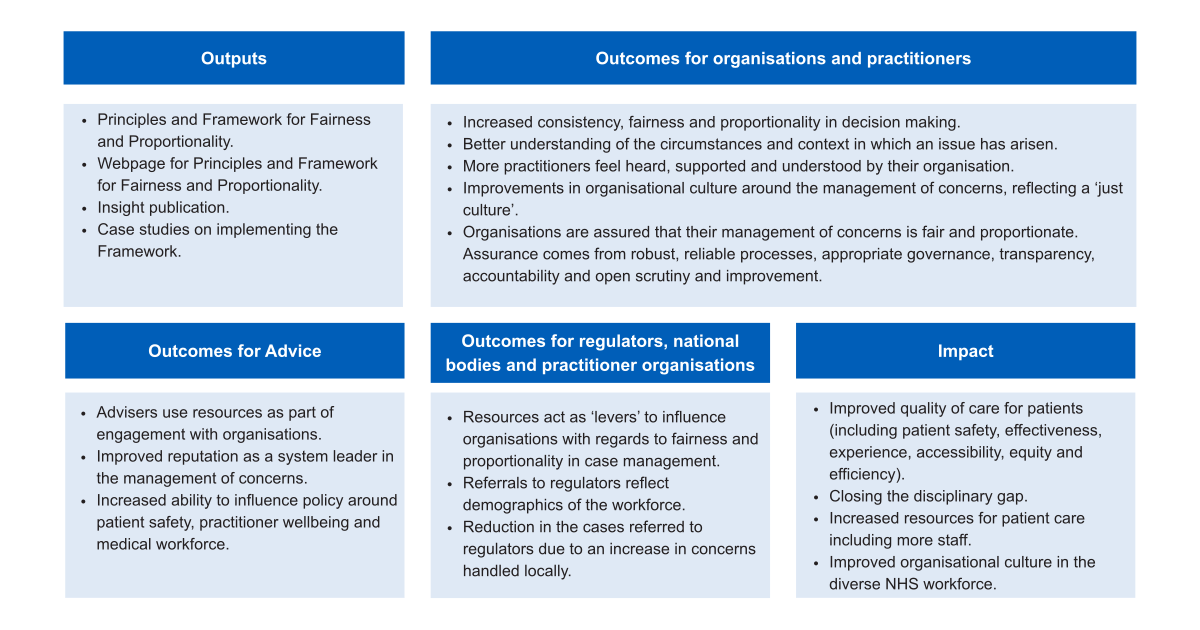
A theory of change model was used to identify which outcomes could be measured with which stakeholders and guided the methods of data collection. A theory of change is a clear, logical description of how and why an intervention is expected to produce its intended outcomes, by mapping the links between activities, assumptions, and short, medium, and long-term changes.
Outcomes and impacts identified in the theory of change
Evaluation methods and participants
Organisation type
Method of data collection
Number of participants
Provider organisations
Survey
26 responses
Provider organisations
Focus groups to explore themes from survey in greater depth
Four focus groups involving nine individuals
National bodies and representative organisations
Interviews
22 individuals across 14 organisations
NHS Resolution's Practitioner Performance Advice Service staff
Diary study over a 2-week period logging references to and use of the Framework and expected impacts.
Nine Advisers
Interviews
Two staff members
Published:
Awards and accreditation badges
Cookies on NHS Resolution website
This site uses cookies. Some of these cookies are necessary to make this website work. We'd also like to use analytics cookies. These send anonymous information about how our site is used to a service called Google Analytics. We use this information to improve our website. You can help us improve our online experience by accepting analytics cookies. Find out more about our Privacy and Cookie policies.