Introduction
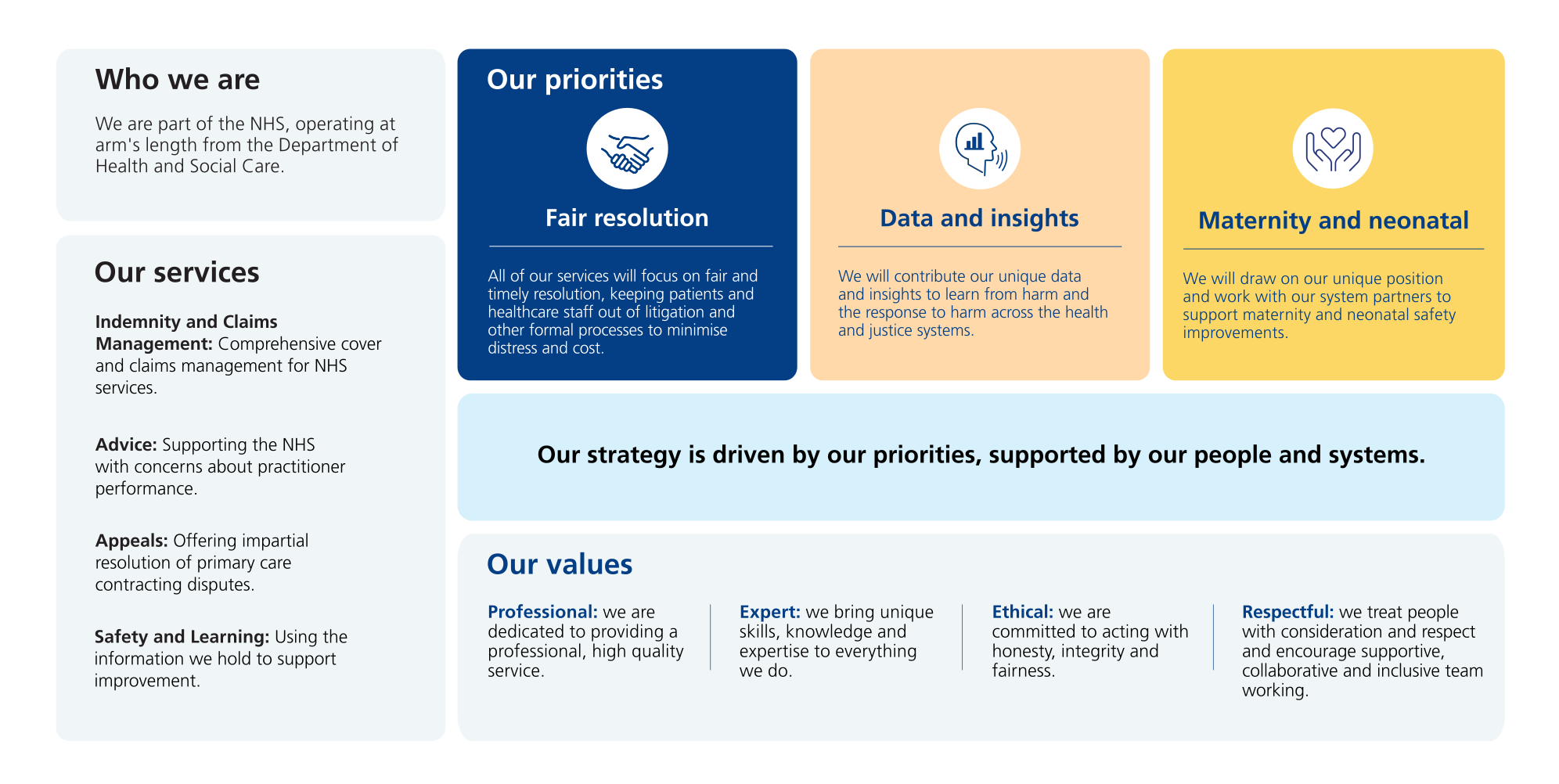
Our strategy at a glance 2025–28
Our strategy at a glance sets out our strategic direction for 2025–28. It brings together our priorities, and the areas we will focus on to guide our work over the next three years.
Welcome from our Chair and Chief Executive
Welcome to our 2026/27 Business Plan, which sets out our financial and delivery plans for the second year of our 2025–28 strategy – Resolution through collaboration. This year, we continue our commitment to delivering fair, timely and effective resolution for patients, healthcare staff and the wider NHS, while driving forward improvements that keep pace with changes in the health and justice systems and support the delivery of safer healthcare for patients.
We are fully committed to supporting the delivery of the NHS 10-year plan with its three strategic policy shifts, and our priorities for the coming year reflect our ongoing focus on ensuring that our services continue to minimise both distress and cost by keeping patients and staff out of litigation and other formal processes wherever possible, and by evolving our processes to deliver the best possible outcomes. We welcome the recent reports on the costs of clinical negligence by the National Audit Office and the Public Accounts Committee respectively. Both reports have provided valuable insights and we are proud that both reports recognised NHS Resolution’s achievements in increasing the proportion of claims resolved without litigation and in reducing both costs and emotional distress for patients and staff. The reports also highlighted our innovative claims management approaches, such as the Early Notification (EN) scheme for maternity, claims mediation and stock-take meetings, which continue to contribute to more effective and compassionate resolution of claims. We will continue to work with ministers and officials across Government to tackle the wider issues raised by the reports, including supporting the work of David Lock KC.
Our Practitioner Performance Advice service will deliver expertise needed by frontline organisations to support the fair, timely and proportionate resolution of performance concerns, enabling the retention of a skilled and valued clinical workforce to deliver safe and effective patient care. At the heart of our approach is understanding the root causes of concerns, the context and culture in which concerns arise, and engaging in meaningful dialogue on these issues with our frontline service users, practitioners and stakeholders.
Our Primary Care Appeals service will deliver a fair, prompt and cost-effective appeals function that avoids the need for the parties to pursue costly and prolonged legal processes, involving judicial review or civil litigation. We will continue to be responsive to the changing healthcare landscape to achieve resolution, supporting local resolution of disputes by providing training and resources to build capacity and capability at a provider level.
We will leverage our unique data and insights to learn from harm and improve the response to the issues we see across the health and justice systems. We are proud to be a trusted source of data, learning and practical tools for our partners across the NHS and, in line with the conclusions of the Dash review, we will explore new opportunities to maximise the impact of our learning resources. Our unique perspective – gained from managing claims, supporting practitioner performance and resolving primary care disputes – enables us to develop resources that drive improvement and support safer care. We are committed to sharing these resources widely with the system, whether through education materials, learning events or digital platforms. We are also committed to engaging with artificial intelligence (AI) and other digital tools to drive efficiencies and enhance our data analysis, always taking a balanced approach that respects data sensitivity and aligns with government guidelines.
We will continue to drive improvements in safety in maternity and neonatal care through our EN scheme and Maternity Incentive Scheme (MIS) and our wider work in this area, as reflected in our strategic priority. We will do this by responding to findings from the independent evaluations of our schemes, which will help us develop these schemes to ensure they continue to drive safety improvements and support families and NHS staff affected by incidents. We will also support the work of our partner organisations and the wider maternity and neonatal system through our chairing of the system-wide MIS Collaborative Advisory Group.
We recognise the importance of adapting to the external environment, including developments in policy, technology and the wider NHS landscape. The integration of our continuous improvement programmes, CaseHub and our Claims Evolution Programme, into business-as-usual will help us deliver more efficient and responsive services. As we look ahead, we will continue to support our people, invest in their development and maximise the use of AI and digital tools to provide more comprehensive analysis and improve transparency and efficiency across our services.
Thank you for your continued support as we work together to resolve, learn and improve for the benefit of patients, staff and the NHS as a whole.